from George Robertson, Port, London: Faber and Faber, 2nd ed., 1987, p. 79

A very well-known and respected Port-maker told me a couple of years ago that the advances in technology and particularly the improvements in the quality of aguardente now in use means that VPs are less likely to go through a dumb phase (i.e. be closed down) in future as the integration of fruit and alcohol is more of a seamless process.djewesbury wrote:Very few I imagine. Perhaps some of the really big 2011s? I don't see the Dow being a handy quaffer any day soon.

Have heard the same..A very well-known and respected Port-maker told me a couple of years ago that the advances in technology and particularly the improvements in the quality of aguardente now in use means that VPs are less likely to go through a dumb phase (i.e. be closed down) in future as the integration of fruit and alcohol is more of a seamless process.
I find myself wondering: 'how have they arrived at that conclusion?'I don't know if that is true or not, but that is what I was told.
The very same book from which my quote came displays exactly this hubristic self-confidence: quite a lot along the lines of "new technologies are making the homely old ways obsolete". Foot treading is not the only example!uncle tom wrote: A generation ago, most port makers were confident that their lagares could be consigned to history - yet most now recognise that treading is necessary for the finest ports.
Excess confidence in new ideas is a dangerous thing..
Many - perhaps most - are now treading grapes at least for premium ports. Treading is sometimes by human foot and sometimes in modern lagares fitted with artifical treaders that simulate the human foot as closely as possible.TLW wrote:"A generation ago, most port makers were confident that their lagares could be consigned to history - yet most now recognise that treading is necessary for the finest ports."
Having not been to the Douro, am I to understand that some are again treading their grapes?
Thank you.AHB wrote:Many - perhaps most - are now treading grapes at least for premium ports. Treading is sometimes by human foot and sometimes in modern lagares fitted with artifical treaders that simulate the human foot as closely as possible.TLW wrote:"A generation ago, most port makers were confident that their lagares could be consigned to history - yet most now recognise that treading is necessary for the finest ports."
Having not been to the Douro, am I to understand that some are again treading their grapes?
While some are heading back to doing small amounts of treading, I disagree with the last part of this statement. Dow's VP's, which are regarded world-wide and within this group as a top notch VP, has been made by autovinification since 1963. So if treading is necessary to make the finest Ports how do you explain Dow's?uncle tom wrote: A generation ago, most port makers were confident that their lagares could be consigned to history - yet most now recognise that treading is necessary for the finest ports.
.
Just think how much better it would have been if it had been foot trodden. I think the wider point that new=good and old=bad has been rightly trashed.Andy Velebil wrote:While some are heading back to doing small amounts of treading, I disagree with the last part of this statement. Dow's VP's, which are regarded world-wide and within this group as a top notch VP, has been made by autovinification since 1963. So if treading is necessary to make the finest Ports how do you explain Dow's?uncle tom wrote: A generation ago, most port makers were confident that their lagares could be consigned to history - yet most now recognise that treading is necessary for the finest ports.
.
Absolutely not true. Wine making and viticulture advancements in the past 20+ years have changed quite a bit and are the reason we all get consistently good products now. Even the inexpensive "commodity wines" are far better now then they ever have been. So new is very much a good thing and thankfully some of that old is gone. But I will conceded that some old things are good and some new things may end up not. But when it comes to wine a whole lot of new has been a very good thing overall.LGTrotter wrote:Just think how much better it would have been if it had been foot trodden. I think the wider point that new=good and old=bad has been rightly trashed.Andy Velebil wrote:While some are heading back to doing small amounts of treading, I disagree with the last part of this statement. Dow's VP's, which are regarded world-wide and within this group as a top notch VP, has been made by autovinification since 1963. So if treading is necessary to make the finest Ports how do you explain Dow's?uncle tom wrote: A generation ago, most port makers were confident that their lagares could be consigned to history - yet most now recognise that treading is necessary for the finest ports.
.
I am not sure that either me or Andy would claim to be in agreement here and no harm in that.jdaw1 wrote:You are agreeing. New is typically but not always better. Old is typically but not always worse.
These are delightfully rosy spectacles you have, when I wade through the overly sweet homogenised dross which I am generally served by people who I still count as friends but who won't spend money on wine I shall think to myself 'This is good'. However it won't be, it will simply be a uniform kind of awfulness rather than the wildly varied type I drank all those years ago.Andy Velebil wrote: Wine making and viticulture advancements in the past 20+ years have changed quite a bit and are the reason we all get consistently good products now. Even the inexpensive "commodity wines" are far better now then they ever have been. So new is very much a good thing and thankfully some of that old is gone. But I will conceded that some old things are good and some new things may end up not. But when it comes to wine a whole lot of new has been a very good thing overall.

Wildly varied is not better than uniform. In fact, most of the time it is worse. (Uniform != average. In this case, we're talking about uniformly good.) That's why it's wildly varied. It does allow for the occasional astoundingly good result, but most of the time it does not. Perhaps more to the point, that occasional astoundingly good result stands out more because the overall "variety" is so bad.LGTrotter wrote:These are delightfully rosy spectacles you have, when I wade through the overly sweet homogenised dross which I am generally served by people who I still count as friends but who won't spend money on wine I shall think to myself 'This is good'. However it won't be, it will simply be a uniform kind of awfulness rather than the wildly varied type I drank all those years ago.
There is an expectation in certain quarters that there must be some rare ports from each vintage that stand head and shoulders above all others, and therefore deserve an exhorbitant price tag.I like being able to buy a bottle of Port without having to worry about whether or not it is going to be good. It's all good. In fact it's all very good. But it does mean that a 2011 Noval Nacional looks a little absurd priced at $1000/bottle next to a nearly equally good 2011 Noval at 1/10 the price.
Not the point.uncle tom wrote:There is an expectation in certain quarters that there must be some rare ports from each vintage that stand head and shoulders above all others, and therefore deserve an exhorbitant price tag.I like being able to buy a bottle of Port without having to worry about whether or not it is going to be good. It's all good. In fact it's all very good. But it does mean that a 2011 Noval Nacional looks a little absurd priced at $1000/bottle next to a nearly equally good 2011 Noval at 1/10 the price.
In practice, as we saw with last month's 66 horizontal and 60 v 63 event; a selection of really good mature ports from a vintage rarely has one player towering over the others
Strangely, NN were able to lay claim to this elevated market for several decades before there was any serious challenge, despite producing some dismal wines in the eighties; - but now there are several contenders.
Personally, I don't put any weight on the hype, packaging and physical presentation of the 'super cuvees' - only a blind tasting will convince me.
It follows that when those with a pretence to excellence absent themselves from major blind events, I am disinclined to give them the benefit of the doubt..
Actually, I think you've both missed the point. I believe that the point is not that these wines are better than anything else that money can buy but that they are rarer than any other port that money can buy. You want something really good to drink? Buy Noval / Dow / Graham / Taylor / Fonseca / etc and pay around $100 per bottle. There are thousands of bottles around so you have a good chance of buying one.Glenn E. wrote:Not the point.uncle tom wrote:There is an expectation in certain quarters that there must be some rare ports from each vintage that stand head and shoulders above all others, and therefore deserve an exhorbitant price tag.I like being able to buy a bottle of Port without having to worry about whether or not it is going to be good. It's all good. In fact it's all very good. But it does mean that a 2011 Noval Nacional looks a little absurd priced at $1000/bottle next to a nearly equally good 2011 Noval at 1/10 the price.
In practice, as we saw with last month's 66 horizontal and 60 v 63 event; a selection of really good mature ports from a vintage rarely has one player towering over the others
Strangely, NN were able to lay claim to this elevated market for several decades before there was any serious challenge, despite producing some dismal wines in the eighties; - but now there are several contenders.
Personally, I don't put any weight on the hype, packaging and physical presentation of the 'super cuvees' - only a blind tasting will convince me.
It follows that when those with a pretence to excellence absent themselves from major blind events, I am disinclined to give them the benefit of the doubt..
The point is more than no one produced a '75 Hutcheson in 2011. An argument that you might be able to make as far back as 1994.
The point is that the gap between the very best Ports and the "merely average" has closed dramatically, and not because the very best Ports are any worse. The quality gap has narrowed so much that the price difference now stands out as starkly absurd, even just between name brands and second brands. The "uniformity" that Owen laments is caused by the fact that just about every Port is at least good now, if not very good or excellent. Owen's beloved variety was an artifact of there being poor Ports from which a NN63 could distance itself.
Yes, I congratulate you on your percipience and endorse the rest of your comments.DRT wrote:I would venture to guess that Owen is being slightly misunderstood here.
Now I must take issue with this, at best this is opinion, I happen to like wildly varied. I would use another wink emoticon but I fancy it would not have enough of the leer about it. And later you say that even NN63 would become boring if it was all that was available; even you think that varied is better than uniform.Glenn E. wrote:Wildly varied is not better than uniform. In fact, most of the time it is worse
This is a shocking admission Alex (and one that, of course, I relate to). Scarcity? Well that is true of a lot of ports which aren't that expensive. Hype and marketing are what Tom spoke of and I think he is nearer the mark.AHB wrote:It's not quality that drives the price, it's scarcity and demand from people like me and Glenn who mop up what we can. Yes these are good products, but they are scarce good products and we want to be able to say that we have some.
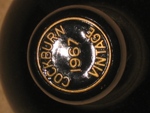
Ah, yes, I did misunderstand what you were saying. However, I'm not sure you can make your point yet. The 1994s are still far too young to me, and that's generally the year that people refer to as the "breakout year" for the "new ways" of making Port.LGTrotter wrote:And Glenn, my lamentations are not that the quality of the port has got better but that, as Derek rightly divined, it has all got better in the same way. I really love the style and taste of old Cockburn. Who now would produce a deliberately pale and medium bodied port? I can't think of one, especially one that is made as a flagship wine and not just off-cuts.
I fear that I caused the misunderstanding in referring to the 10x price difference between Noval and Noval Nacional. The point I was attempting to make was not about super cuvees at all, but rather that the gap between the best Ports (e.g. Noval Nacional, which coincidentally happens to be a super cuvee) and the rest of the pack (e.g. the regular Noval) has narrowed dramatically. I could have made the same point less dramatically using Taylor and Skeffington, or Graham and Quarles Harris. Thus my second attempt, which noted that no one made a 1975 Hutcheson in 2011. Which is to say, I highly doubt that anyone made a bad Port in 2011 - viticultural standards have risen beyond the point where bad Port is still bottled and sold. And this is a good thing.AHB wrote:Actually, I think you've both missed the point. I believe that the point is not that these wines are better than anything else that money can buy but that they are rarer than any other port that money can buy. You want something really good to drink? Buy Noval / Dow / Graham / Taylor / Fonseca / etc and pay around $100 per bottle. There are thousands of bottles around so you have a good chance of buying one.
My precioussssssssesssss...AHB wrote:Want something rare and good to drink? Get a bottle of Nacional / Stone Terraces / Vargellas Vinha Velha and pay $1,000 per bottle - if you can find it because there were only 250 cases made and Glenn bought them all.
Tom's implied advice of buy some port and wait is probably best.uncle tom wrote:In practice, as we saw with last month's 66 horizontal and 60 v 63 event; a selection of really good mature ports from a vintage rarely has one player towering over the others.
My computer's choice of bottles for my home consumption is equally divided this year between the 'Autumn Years' of '55 to '70 and the 'Dark Ages' of '71 to '93.The 1994s are still far too young to me, and that's generally the year that people refer to as the "breakout year" for the "new ways" of making Port.
You will no doubt be please to know that my methodology remains unchanged, albeit that it is now applied less often than it once was.LGTrotter wrote:By coincidence I was reading a thread this morning called , I think; 'how much is enough' where you were explaining the various parameters by which you (and some others) selected port for drinking. I can't find it now though. So it becomes less interesting.
Found it; http://www.theportforum.com/viewtopic.p ... 567#p52567
uncle tom wrote:
My computer's choice of bottles for my home consumption is equally divided this year between the 'Autumn Years' of '55 to '70 and the 'Dark Ages' of '71 to '93.
Although it is permitted to nominate a bottle from '94 - the first year of 'The Renaissance' - it has determined that there are more worthy candidates on every occasion..
 love these time frame descriptors. I was calling the 'Dark Ages' 'The Lost decade of Port' but I like yours better as it really was a bit longer than a decade where all issues happened.
 A pleasant side effect of having 4 cellars, no doubt.uncle tom wrote: Although it is permitted to nominate a bottle from '94 - the first year of 'The Renaissance' - it has determined that there are more worthy candidates on every occasion..