Page 1 of 1
What type of port is this?
Posted: 10:19 Tue 07 Oct 2014
by PopulusTremula
Browsing the lots at a current wine auction in Sweden i came across a bottle of Barros 1947, listed as a VP. The bottle appears to have a T-stopper instead of a driven cork, which has me slightly perplexed. Is this common for Barros and would it have been used for a vintage as old as 1947? I believe this was before the concept of LBV was introduced, and the text on the bottle and capsule are not consistent with their colheitas.
Can anyone here shed some light on what type of port this is likely to be?
URL:
http://magasin5.auktionsverket.se/1410/ ... tage-port/
1. Click the image for a high res version.
2. Link to the auction listings:
http://magasin5.auktionsverket.com/auktion/Drycker/
Re: What type of port is this?
Posted: 10:29 Tue 07 Oct 2014
by RAYC
Doesn't look to me like an old style selo so a colheita bottled in the 80s?
Re: What type of port is this?
Posted: 10:50 Tue 07 Oct 2014
by flash_uk
A similar looking bottle is here:
http://www.belgiumwinewatchers.com/en/w ... TAWNY-PORT
suggesting it could be a basic tawny, which would make sense given the stopper.
Re: What type of port is this?
Posted: 10:52 Tue 07 Oct 2014
by PopulusTremula
Prior to posting i googled and found images of 47 colheitas. These appear to have the word colheita included on the bottle as well. Some but not all have white capsules.
Re: What type of port is this?
Posted: 11:11 Tue 07 Oct 2014
by PhilW
Bottled post-1975 since new Selo.
Even if re-corked, if VP, should not be a T-stopper.
Chances of re-corked LBV, very slim.
Barros normally put "colheita" or "matured in wood" for colheita/tawny, but then they also normally put "vintage port" if VP.
Agree with others that this is most likely colheita.
Re: What type of port is this?
Posted: 12:51 Tue 07 Oct 2014
by RAYC
PhilW wrote:Barros normally put "colheita" or "matured in wood" for colheita/tawny, but then they also normally put "vintage port" if VP.
Presumably not always on bottles destined for non-English speaking markets - eg:
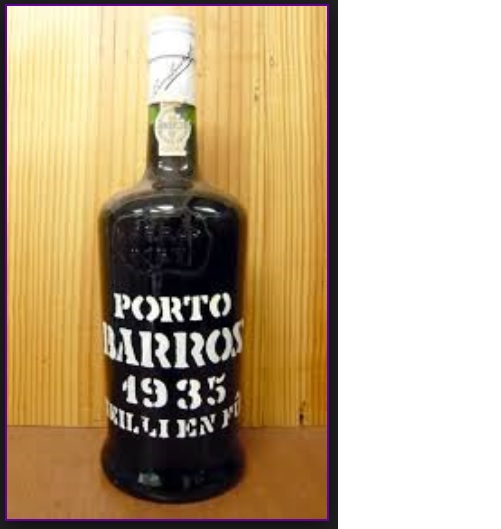
- barros.jpg (50.47 KiB) Viewed 4482 times
Perhaps their Swedish importer did not provide a translation for "matured in wood" at the time...
Re: What type of port is this?
Posted: 13:27 Tue 07 Oct 2014
by PhilW
RAYC wrote:PhilW wrote:Barros normally put "colheita" or "matured in wood" for colheita/tawny, but then they also normally put "vintage port" if VP.
Presumably not always on bottles destined for non-English speaking markets
Indeed; I did not mean that it would always be in English.
Re: What type of port is this?
Posted: 13:34 Tue 07 Oct 2014
by Andy Velebil
That would be a Colheita and not a Vintage Port. bottled sometime on or after the mid 1970's.
The T-stopper was used on a lot of Colheita's back then, as they were generally not designed to be stored after bottling for a long period of time. I've had a fair amount of old Tawny's (Colheita's) that have had T-stoppers in them.
Re: What type of port is this?
Posted: 15:29 Tue 07 Oct 2014
by RAYC
PhilW wrote:RAYC wrote:PhilW wrote:Barros normally put "colheita" or "matured in wood" for colheita/tawny, but then they also normally put "vintage port" if VP.
Presumably not always on bottles destined for non-English speaking markets
Indeed; I did not mean that it would always be in English.
So in terms of explaining its absence on this bottle, my next lines of thinking were: a) how many different languages for how many different markets would they produce bottles for and b) for other markets, might they just use a plain bottle...all idle speculation of course